
Thrust Blocks
Thrust block failures
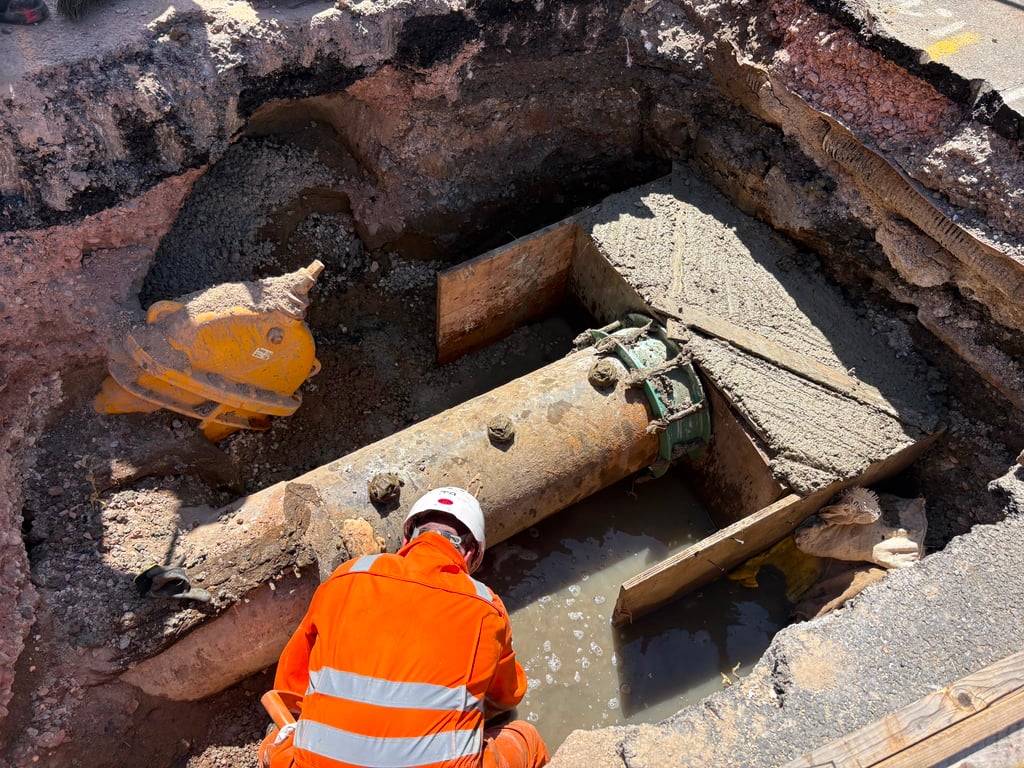
Thrust Block Failures: Why Proper Design Could Prevent Your Next Pipeline Failure
When it comes to buried pressure pipelines, thrust blocks are often overlooked. Hidden beneath the ground and rarely seen once installed, they quietly perform one of the most important jobs in any pressurised pipeline system – resisting the enormous forces generated by changes in pipe direction, valves, tees and dead ends.
When designed and installed correctly, a thrust block can provide decades of reliable service. However, when they fail, the consequences can be severe, resulting in pipeline movement, joint separation, flooding, service interruptions, costly repairs and significant safety risks.
At Infinity Eng, we regularly support contractors, principal contractors and utility providers with Temporary Works design and engineering solutions for complex excavation and pipeline projects. We've seen first-hand how investing in proper thrust restraint design can prevent expensive failures before they happen.
What Causes a Thrust Block to Fail?
Many people assume a larger concrete block automatically means a safer design. In reality, the effectiveness of a thrust block depends far more on engineering than simply increasing its size.
Common causes of failure include:
Incorrect thrust calculations.
Underestimating operating or pressure testing loads.
Assuming the wrong soil bearing capacity.
Casting the block against loose backfill instead of undisturbed ground.
Poor excavation or inadequate formation preparation.
Groundwater reducing the strength of the supporting soil.
Ignoring future pressure surges or water hammer effects.
Changes to surrounding ground conditions following later excavation.
A properly designed thrust restraint system should always consider hydraulic forces, pipe configuration, soil properties and installation conditions rather than relying on standard details alone.
The Real Cost of Failure
A failed thrust block rarely means replacing just a concrete block.
Instead, it can lead to:
Pipe joints pulling apart.
Fittings rotating or displacing.
Water or gas escaping under pressure.
Flooding of highways or excavations.
Emergency shutdowns.
Damage to surrounding infrastructure.
Programme delays.
Increased reinstatement costs.
Potential health and safety incidents.
Even relatively small diameter pressure mains can generate several tonnes of unbalanced force at bends, tees or end caps. Without adequate restraint, these forces can cause significant movement within seconds of pressurisation.
Why Ground Conditions Matter
One of the biggest misconceptions is that the concrete provides the restraint.
It doesn't.
The surrounding ground provides the restraint.
The concrete simply transfers the load into the soil.
If the block bears against disturbed material, made ground, soft clay or saturated soils, the entire block can move under load regardless of how much concrete has been used.
This is why understanding ground conditions is critical. A properly engineered design should consider:
Soil bearing capacity.
Groundwater conditions.
Excavation geometry.
Existing underground services.
Future loading conditions.
Pipe material and joint type.
Installation methodology.
Construction sequencing.
Every site is different, and every thrust block should be designed to suit the conditions encountered rather than relying solely on standard drawings.
Temporary Works – More Than Just a Drawing
Temporary Works isn't simply about producing calculations.
It's about ensuring the construction method is safe, practical and buildable.
At Infinity Eng, our Temporary Works team develops thrust restraint solutions that consider both the permanent engineering requirements and the practical realities faced by site teams.
Our designs can include:
Project-specific thrust block calculations.
Temporary Works design packages.
Excavation support coordination.
Ground bearing assessments.
Pressure testing considerations.
Installation sequencing.
Buildability reviews.
Compliance with relevant UK standards and client specifications.
By considering the complete construction process, we help reduce project risk while providing confidence that the installed solution will perform as intended.
Reducing Risk Before Construction Starts
Many thrust block issues are identified too late—often during construction or, worse, during pressure testing.
Early engineering input allows contractors to:
Identify unsuitable ground before construction.
Optimise thrust block dimensions.
Reduce unnecessary concrete volumes.
Avoid costly redesigns on site.
Improve programme certainty.
Demonstrate engineering compliance.
Protect both operatives and the public.
The cost of proper engineering is typically a fraction of the cost of repairing a failed pipeline.
How Infinity Eng Can Help
Whether you're delivering a new gas main, water main, pressure pipeline or complex utility diversion, Infinity Eng provides practical, buildable Temporary Works solutions tailored to your project.
Our engineers combine technical expertise with hands-on utility construction experience, ensuring every design is practical, compliant and buildable.
Our Temporary Works services include:
Thrust block design and calculations.
Temporary Works design packages.
Trench support and excavation design.
Pipeline restraint assessments.
Ground bearing assessments.
Construction methodology reviews.
Design verification.
Technical support throughout project delivery.
From initial design through to installation and pressure testing, we work alongside contractors to minimise risk, improve efficiency and ensure every Temporary Works solution is fit for purpose.
Speak to Infinity Eng
If you're planning a pressure pipeline installation, diversion or reinforcement project, don't leave thrust restraint to chance.
Infinity Eng can provide bespoke Temporary Works designs, thrust block calculations and engineering support that help you deliver safer, more efficient projects while reducing programme and construction risk.
Get in touch with our team today to discuss your project requirements and discover how our Temporary Works expertise can add value from day one.
Any Questions?
sales@infinityeng.co.uk