Temporary works and design
This blog explores why temporary works are such a critical part of utility excavation and infrastructure projects. It looks at the risks of poor planning, the challenges contractors face on live utility sites, and how proper temporary works design helps keep projects safe, compliant, and running efficiently. Drawing on real industry experience, the article highlights why temporary works should never be treated as an afterthought.
TEMPORARY WORKS
Why Temporary Works Can’t Be an Afterthought on Utility Projects
On a lot of utility jobs, temporary works only really get attention once the excavation is ready to start. By that point, the pressure is already on. Traffic management is in place, teams are ready to dig, and everyone wants the job moving as quickly as possible.
The problem is that temporary works are one of the biggest factors in keeping an excavation safe.
Whether it’s a trench in the middle of a busy road or a deep excavation around existing services, poor planning can create serious risks very quickly. Ground conditions change, water appears unexpectedly, access becomes tighter than expected, and suddenly what looked straightforward on paper becomes far more complicated on site.
That’s why proper temporary works design matters.
At INFINITY Eng, we treat temporary works as part of the engineering process from day one — not just paperwork that needs signing off before digging starts.
Every Excavation Is Different
One of the biggest mistakes on utility projects is assuming the same approach will work everywhere.
In reality, no two excavations are ever exactly alike. You might have good ground conditions on one site, then move half a mile down the road and hit unstable ground, heavy groundwater, or congested services that completely change the job.
That’s where temporary works become critical.
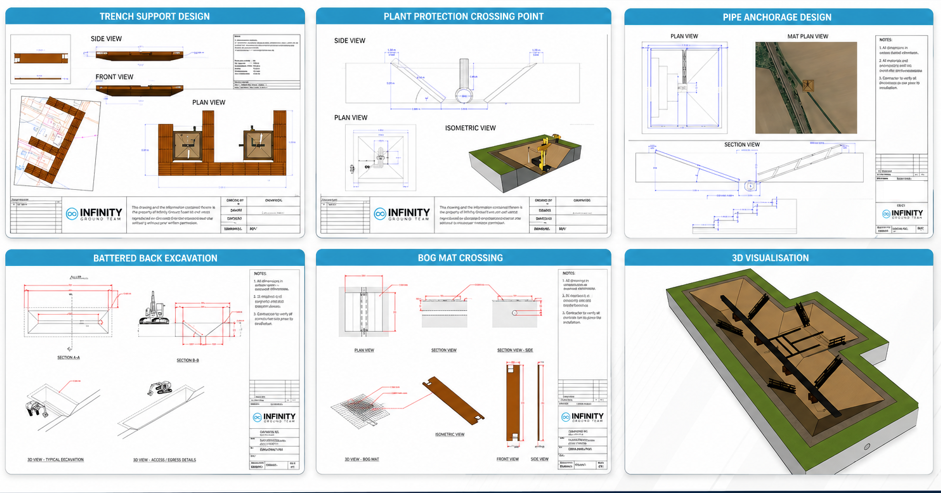
Things like trench support, shoring, working platforms, or temporary access arrangements are there to keep the excavation stable and the workforce safe while the work is being carried out.
Without the right support in place, problems can escalate quickly — and usually when the project is already under pressure.
Any Questions?
sales@infinityeng.co.uk